
An 11 p.m. flight does not let you check bags at Seoul Station at 7:40 p.m. The flight-based deadline is only one limit. City-terminal check-in reception ends at 6:50 p.m., so a family planning dinner before dropping its suitcases needs to reverse that order.
For Seoul Station check-in, keep three different times in your notes: the reception cutoff, the required completion time, and your eventual airport journey. They are not interchangeable. Official guidance checked September 22, 2026, is linked beside the rules below; all times here are Korea Standard Time.
Reception closes before the operating day ends
AREX’s current city-terminal instructions list check-in from 5:20 a.m. to 7 p.m., with reception closing at 6:50 p.m. They separately require completion at least three hours before a Terminal 1 departure, or three hours and 20 minutes before a Terminal 2 departure.
The distinction matters: the 7 p.m. operating end is not an invitation to join the line at 6:59. Nor does reaching the counter before 6:50 guarantee that you can finish before your flight-relative deadline. Treat both rules as constraints, not as an appointment time.
For an eligible T2 flight leaving at 11 p.m., subtracting three hours and 20 minutes gives 7:40 p.m. That calculation is correct but insufficient: reception has already closed. For a 5 p.m. T2 flight, the completion deadline is 1:40 p.m.; the evening reception limit is irrelevant because the flight creates an earlier boundary.
Put your departure through this two-clock check
This is K-Trend’s planning worksheet, not a train timetable or a promise of counter acceptance. First subtract the terminal-specific interval from the flight time. Then compare that result with 6:50 p.m. The earlier time identifies which constraint you need to plan around; arrive earlier still to allow for queuing and processing.
On a narrow screen, scroll the table horizontally to read all three columns.
| Flight | Finish check-in by | Plan around |
|---|---|---|
| T1, 5 p.m. | 2 p.m. | Flight deadline |
| T2, 5 p.m. | 1:40 p.m. | Flight deadline |
| T2, 9 p.m. | 5:40 p.m. | Flight deadline |
| T2, 11 p.m. | 7:40 p.m. by flight rule alone | 6:50 p.m. reception cutoff comes first |
Calculation: T1 uses departure minus 180 minutes; T2 uses departure minus 200 minutes. The examples assume the flight and check-in are on the same calendar day. They do not model overnight departures, queues, document checks, or airline-specific restrictions.
A useful consequence is that later flights eventually stop buying you more city-terminal flexibility. Under these rules, the two boundaries meet at 9:50 p.m. for T1 and 10:10 p.m. for T2. Beyond those departure times, reception closes before the flight-based limit. Those are calculated crossover points, not recommended flight or arrival times.
Check eligibility before buying the last-day plan
Incheon Airport’s city-terminal guide limits Seoul Station service to Express train customers on eligible same-day international departures from Incheon. Airline availability varies. Confirm the operating airline, route, departure terminal, and any special assistance or baggage needs before relying on the service.
An Express ticket is therefore part of the eligibility check, not proof that every flight qualifies. If you are still choosing the airport train, our AREX Express versus All-Stop comparison covers the separate transport decision. Do not substitute the All-Stop journey for a service whose terms require Express.
The airport guide places the city terminal on B2 and Express boarding on B7. Include the station’s internal movement in your plan, but do not invent a universal elevator or walking allowance. Your family’s luggage and mobility needs should determine the margin.
A bag-free afternoon is useful only if the next leg is secure
K-Trend’s assessment: the service is most useful when it removes a difficult luggage handoff from an already workable departure day. It is less attractive when the family must make a special detour, resolve an uncertain airline exception, or squeeze processing against a cutoff.
Build two plans before leaving the hotel. Plan A is confirmed city check-in with a separately chosen airport train and enough airport time. Plan B is ordinary airport check-in, with any city stop shortened or skipped. If the city service is unavailable, Seoul Station luggage storage answers a different question: temporarily holding bags does not check them onto a flight.
Completing city-terminal formalities also does not make the airport journey disappear. Confirm your actual departure terminal rather than budgeting for a last-minute T1-to-T2 correction. The city-counter cutoff, train departure, airport procedures, and boarding deadline belong on separate lines.
For an upcoming trip, the worksheet remains useful only while the published hours and terminal rules remain unchanged. Recheck the operator and airline before departure; if either changes, replace the inputs rather than carrying forward the old answer. The final question is not “How late can we drop the bags?” but “Does early bag drop make our whole departure day easier?”
Sources and calculation notes
Checked September 22, 2026: AREX city-terminal instructions and Incheon Airport city-terminal services. The table and crossover calculations are K-Trend’s arithmetic from those rules, not published service guarantees. Confirm eligibility with the airline for your exact booking.
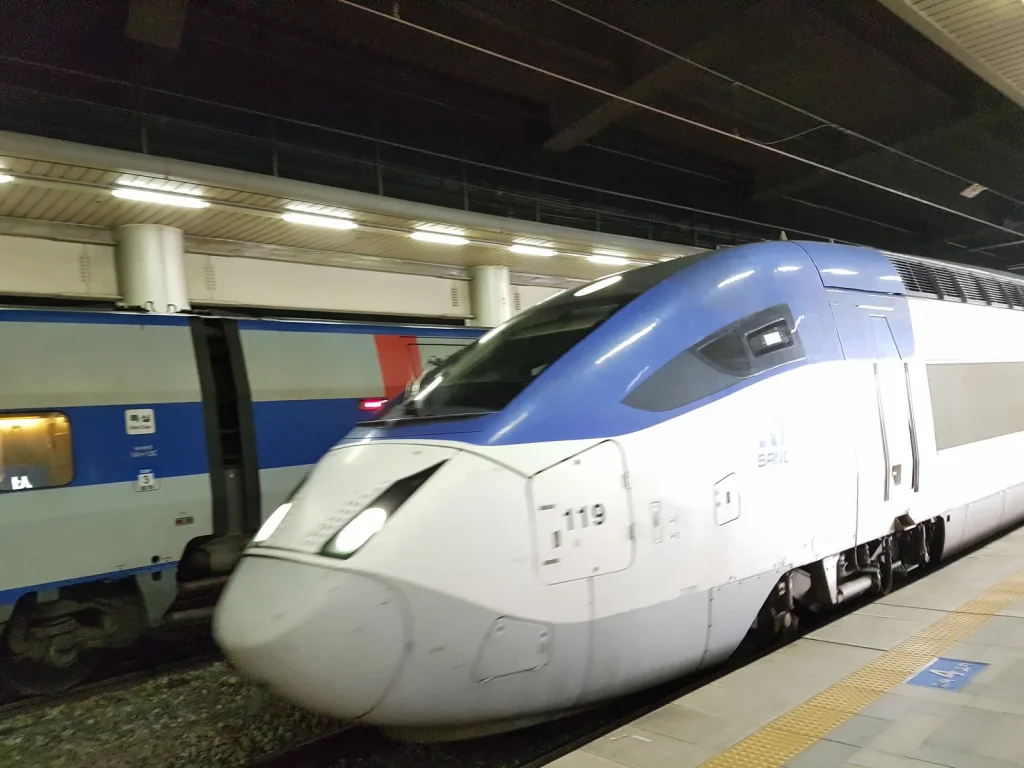
Featured photograph: Seoul Station at night, Seoul Metropolitan Government, Seoullo 7017 editorial photo collection. The photograph shows the station exterior, not the check-in counter.