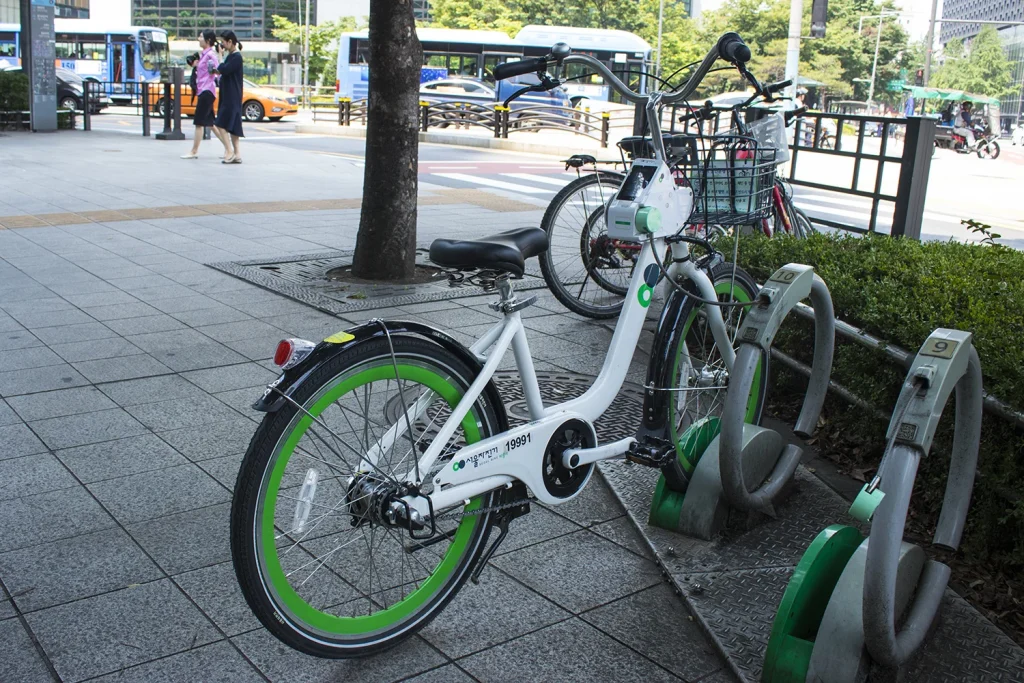
Featured image — Archive photo: *Youngjin, Wikimedia Commons, CC BY-SA 3.0. The 2019 bicycle is context, not a current app or return-instruction image. Format-converted to WebP; framing unchanged by K-Trend.
A Ttareungi day pass buys a day of access, not a day with the same bicycle. The useful number is the longest rental between confirmed returns.
You can spend two hours cycling around Seoul and pay less than someone who rides for 90 minutes. The difference is not speed or distance: it is whether the bike goes back between rides. For an adult visitor choosing a Ttareungi day pass, the return plan matters as much as the pass price.
Two clocks run at the same time
Seoul’s English service guide starts a one-day pass at the first rental, rather than at purchase. Its example buys the pass at 1 p.m., starts riding at 3 p.m., and ends access at 3 p.m. the following day. Inside that window, each rental has its own allowance. Returning and renting again starts another rental; a café stop with the bike still checked out does not.
The city’s fee table lists one-, two-, and three-hour day passes at ₩1,000, ₩2,000, and ₩3,000. The Korean table, updated March 10, 2026, specifies ₩200 per additional five minutes for each option. These are per-rider prices, not a shared family ticket.
A 90-minute ride is not the same as two 45-minute rides
The following is our cost model, not a tracked journey. It assumes one adult, no earlier unpaid charges, successful returns, and rentals entirely within the pass’s validity. We use exact five-minute increments so the comparison does not depend on how a partial extra interval is rounded.
On a narrow screen, scroll the table horizontally to compare the plans.
| Rental pattern | One-hour pass | Two-hour pass | Three-hour pass |
|---|---|---|---|
| Two 45-minute rentals, with a return between | ₩1,000 | ₩2,000 | ₩3,000 |
| One continuous 90-minute rental | ₩2,200 | ₩2,000 | ₩3,000 |
| One continuous 150-minute rental | ₩4,600 | ₩3,200 | ₩3,000 |
For the 90-minute rental, the one-hour option adds six five-minute blocks: ₩1,000 + (6 × ₩200) = ₩2,200. Buying two hours instead lowers the modeled bill by ₩200 and avoids the planned overrun. At 150 minutes, the three-hour pass is ₩200 cheaper than buying two hours and deliberately running 30 minutes over.
Those small differences should not become a target for last-second returns. The larger practical distinction is whether your route contains a convenient place to end a rental. Four short rides with confirmed returns can suit the cheapest pass; one long outing without a reliable return point may not.
Build the stop into the route before choosing the pass
Write down your longest planned stretch with a bicycle, including photography stops and breaks before its return. Then check the official service for rental stations near the places where you actually want to stop. A station on a map is not a promise that your preferred bike will be available when you restart.
For two adults, multiply the appropriate modeled bill by two, but keep each rental’s return status separate. One rider’s completed return does not establish that the other bicycle was returned. This article does not assess children’s eligibility, bicycle fit, or a particular foreign payment card; resolve those in the official service before buying.
Our assessment: paying an extra ₩1,000 for a longer allowance can be reasonable when it removes an inconvenient return from an otherwise sensible route. It is not good value merely because the pass says “two hours.” If your stops already line up with successful returns, you may buy time you never need.
If weather or availability changes the plan, compare the bike outing with the public-transport spending you would actually replace. Our three-day Climate Card calculation addresses a different travel basket; it is not proof that a bicycle rental is included. Families switching to rail should also check children’s subway fares before treating every traveler as a paying adult.
At the end of the trip, bicycle charges and stored transit-card money remain different accounts. The T-money store-refund limit does not cancel an outstanding bike fee. Finish the return in the bike service first.
Sources checked September 22, 2026: Seoul Metropolitan Government’s English pass guide and current Korean fare table. Recheck prices and rental conditions before purchase; the examples above are K-Trend calculations.