A Seoul subway restroom visit that takes five minutes can still mean a longer trip outside the gates. For a parent with a child, the outward walk, a queue, and the walk back all consume the re-entry window. The useful question is whether the whole excursion fits comfortably—not whether the restroom itself is nearby.
At qualifying gates, Seoul’s concession treats return within 15 minutes as a transfer instead of charging another base fare. The city’s notice specifies the same station and the same line. The family time budget below applies only after the fare conditions are satisfied. Seoul’s official re-entry notice
Before tapping out, answer the gate question
Ask station staff whether your planned exit and return qualify on the card or ticket you are using. Show the actual fare medium, identify the line, and point to the intended return gate. This article does not establish eligibility for every ticket or pass.
You can use this Korean question, written for this guide:
이 카드로 나갔다가 같은 호선, 같은 역에 15분 안에 다시 들어오면 재승차 할인이 적용되나요?
In English: “If I exit with this card and re-enter the same line at the same station within 15 minutes, does the re-entry fare concession apply?”
For a restroom visit, ask whether there is an accessible option inside the paid area first. That is a planning suggestion, not a claim about facilities at your station. Avoid committing to an exit solely because a map places a restroom nearby; the walking route and the return gates matter too.
What the 2026 expansion changes—and what it does not
The Ministry of Land, Infrastructure and Transport announced a June 20, 2026 extension to specified Korail metropolitan rail services. Its conditions include the same station and line, an eligible transport card, and one use during a rail journey. Ministry announcement on Korea Policy Briefing, June 15, 2026
That notice directs single-journey and season-ticket users to request staff assistance instead. It also names excluded operators and sections. Expansion does not mean every rail service on a metropolitan map participates.
One older English city page still labels its coverage list October 7, 2023. That list predates the Korail expansion; it cannot settle today’s coverage by itself. Its explanation remains useful for another reason: re-entry is a transfer concession, not unlimited permission to leave and return. Seoul’s dated English guide
For a family, this makes the station check more useful than memorizing a network headline. Confirm the product and return arrangement actually in front of you, including whether you have already used the benefit. Do not assume that an unlimited tourist pass follows ordinary stored-value-card rules.
Budget the return walk, not just the restroom visit
Consider a hypothetical stop with two minutes from the exit gate to the facility, five minutes there, and three minutes back. The estimated excursion is 2 + 5 + 3 = 10 minutes, leaving five minutes against a 15-minute window.
Add a four-minute queue and the same estimate becomes 14 minutes, leaving just one minute. Nothing about the station’s eligibility has changed, but the plan is much less forgiving. These are illustrative durations, not measured walking times or a recommended minimum safety margin.
Write the three components separately: outward walk, activity or queue, and return walk. Stroller routing, unfamiliar signage, and a second child’s needs belong in your own estimate. A phone timer can remind you of elapsed time; it cannot confirm that a fare rule applies.
Here is a reusable note for the itinerary:
- Outward walk: ___ minutes. Restroom visit plus expected wait: ___ minutes. Return route: ___ minutes.
- Total estimated excursion: . Unused portion of the 15-minute window: . Main source of uncertainty: ___.
- If the queue is longer than expected, our alternative is: ask staff / choose another arrangement / accept another fare if needed.
Negative remaining time means the estimate already exceeds the window. A positive result is not a guarantee: the inputs are your estimates, not measured station data. Do not invent a shorter return walk simply to make the result fit.
Our editorial view: for a family, the concession is best treated as a useful fallback, not a 15-minute challenge. If the plan depends on a perfect queue or rushing a child, choose a different arrangement or accept that another fare may apply. The potential saving is not a reason to hurry on stairs or through gates.
At the station, the most useful saved note is short: line, station, confirmed return gate, fare medium, and tap-out time. It gives you something more actionable than a screenshot saying only “15 minutes.”
For separate fare decisions, see Seoul subway child fares, the Climate Card’s three-day break-even point, and the Tmoney store-refund threshold. Official sources checked September 14, 2026; historical coverage dates are preserved above.
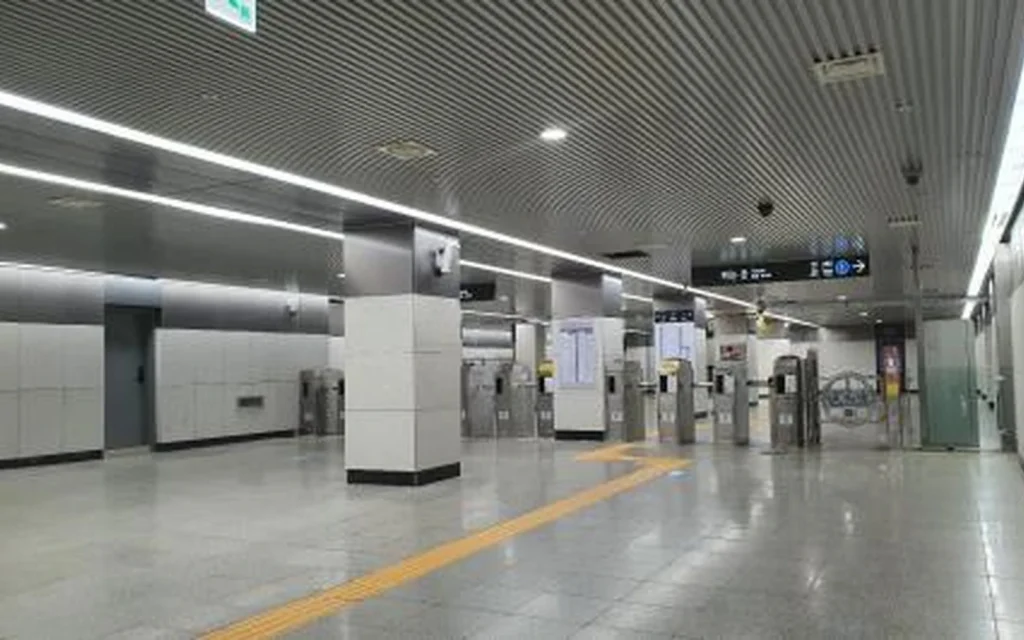
Featured photo: a renovated Seoul Subway Line 1 concourse, from the Seoul Metropolitan Government’s 2021 station renovation release. Used under KOGL Type 1. The archive image illustrates a station interior, not the location or timing of the hypothetical restroom trip.