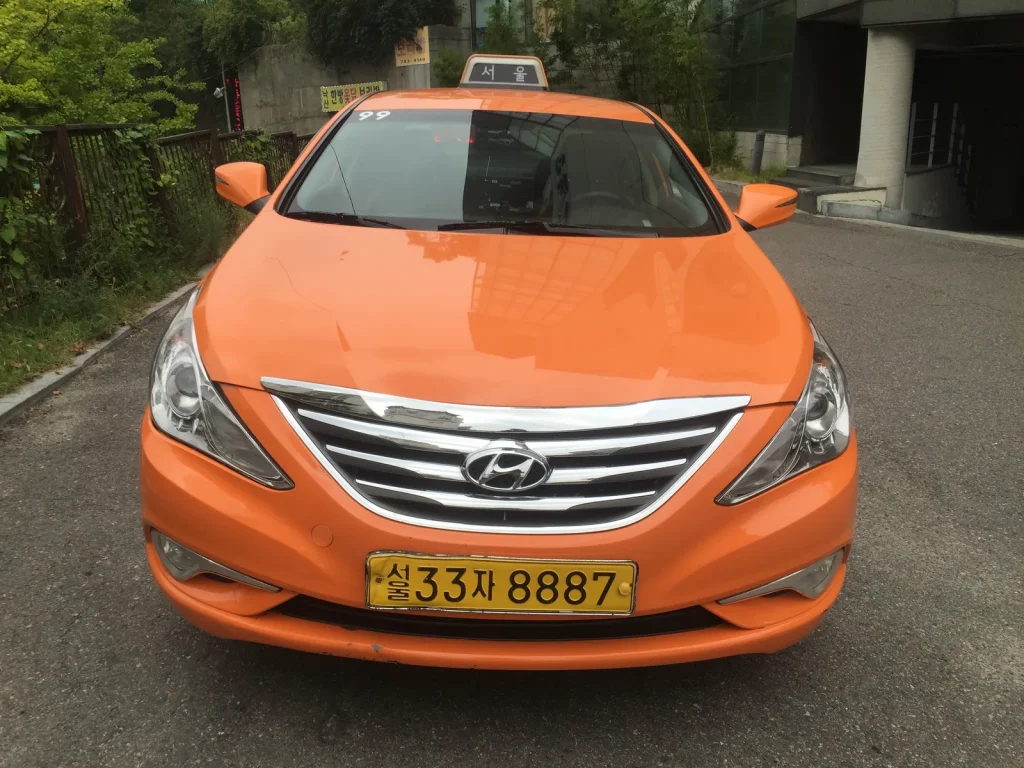
Seoul taxi night fares for standard sedans include a surcharge from 10 p.m., not midnight. It rises from 20% to 40% at 11 p.m., then drops back to 20% at 2 a.m. The practical question is whether your plans are flexible enough for the difference to matter.
Before the ride
- Check the vehicle and service type before using a standard-taxi fare table.
- The base fare rises by ₩900 between the two nighttime bands; the total trip difference can be larger.
- Compare the actual ride offer and departure options, not just the clock.
An evening can stay on budget right up to the ride home. That does not mean a higher fare is necessarily wrong: the same distance can cost more in a different time band. But a percentage alone is not enough to audit the bill, either. Seoul lists separate tariffs for standard sedans, larger vehicles, deluxe cabs and branded services.
Seoul taxi night fares by time band
The city’s posted standard-sedan tariff has the following starting amounts for the first 1.6 kilometers. These are the current published rates checked September 7, 2026, under a table effective February 1, 2023—not a newly announced 2026 increase. Source: Seoul Metropolitan Government taxi tariff.
| Time band | Night surcharge | Starting fare |
|---|---|---|
| 4 a.m.–10 p.m. | None | ₩4,800 |
| 10–11 p.m. | 20% | ₩5,800 |
| 11 p.m.–2 a.m. | 40% | ₩6,700 |
| 2–4 a.m. | 20% | ₩5,800 |
The important boundary for an ordinary evening out is 11 p.m. Leaving at 10:30 does not avoid the nighttime rate, but it sits in the lower nighttime band. These bands describe the tariff, not a promise that boarding just before a boundary locks a lower rate for an entire journey.
₩900 is the starting difference, not a route quote
Our calculation from the published base fares is straightforward: ₩6,700 minus ₩5,800 equals ₩900. Against the daytime starting amount, the peak-night difference is ₩1,900. A short journey makes those figures useful context; a longer one needs more than subtraction.
Beyond the initial distance, the standard table lists increments of ₩100, ₩120 or ₩140 per 131 meters and per 30 seconds, depending on the time band. Slow traffic can bring distance and time into the calculation together. That is why multiplying kilometers by one rate is not a dependable full-trip estimate. SMG metering rules, checked September 7, 2026.
For a family deciding whether to leave an attraction a little earlier, the question is not “Can we save 40%?” The 40% figure compares with the ordinary tariff, not with the already-surcharged 10–11 p.m. band. Nor does it describe a discount available simply by waiting in a queue.
Identify the service before challenging the amount
Look at the booking confirmation and vehicle category first. A larger vehicle or a branded premium service is not automatically priced like a standard sedan. Airport arrangements and journeys beyond the city boundary also need their own checks. The city tariff page separates these categories; its September 7, 2026 listing is the reference for this comparison.
If a charge needs clarification, preserve the receipt, booking details, trip time and vehicle information. Seoul’s multilingual taxi reporting announcement, checked September 7, 2026, explains the city’s QR-based feedback route. A fare table is useful evidence for a question, not proof by itself that a particular driver overcharged.
A better exit plan than waiting for 2 a.m.
Our take: changing an already-flexible departure by half an hour can be sensible. Keeping children out for several extra hours just to reach the lower 2 a.m. band is a poor trade when the base-fare saving is only ₩900. The larger variables are the actual route, available vehicle and whether the later departure makes the rest of the night harder.
For an evening at Seoul Light DDP, decide on the return journey before choosing the last viewing slot. If rail is still a realistic option for your itinerary, compare the children’s subway fare rules; a taxi is charged as a vehicle journey, while rail budgeting depends on each traveler. A Climate Card break-even calculation can help with the broader trip, but should not decide a tired family’s final ride in isolation.
For travel over the next few months, this time-band comparison remains useful if the standard tariff stays unchanged. It loses its numeric value if Seoul revises that tariff, and it never substitutes for the terms of a different service. Recheck the city page and the ride details before committing.
Sources: Seoul Metropolitan Government’s taxi tariff and multilingual taxi-reporting announcement, linked beside the relevant claims.
Checked September 7, 2026. Amounts are Korean won. Base-fare differences are K-Trend calculations; no route, queue time or final bill is guaranteed.
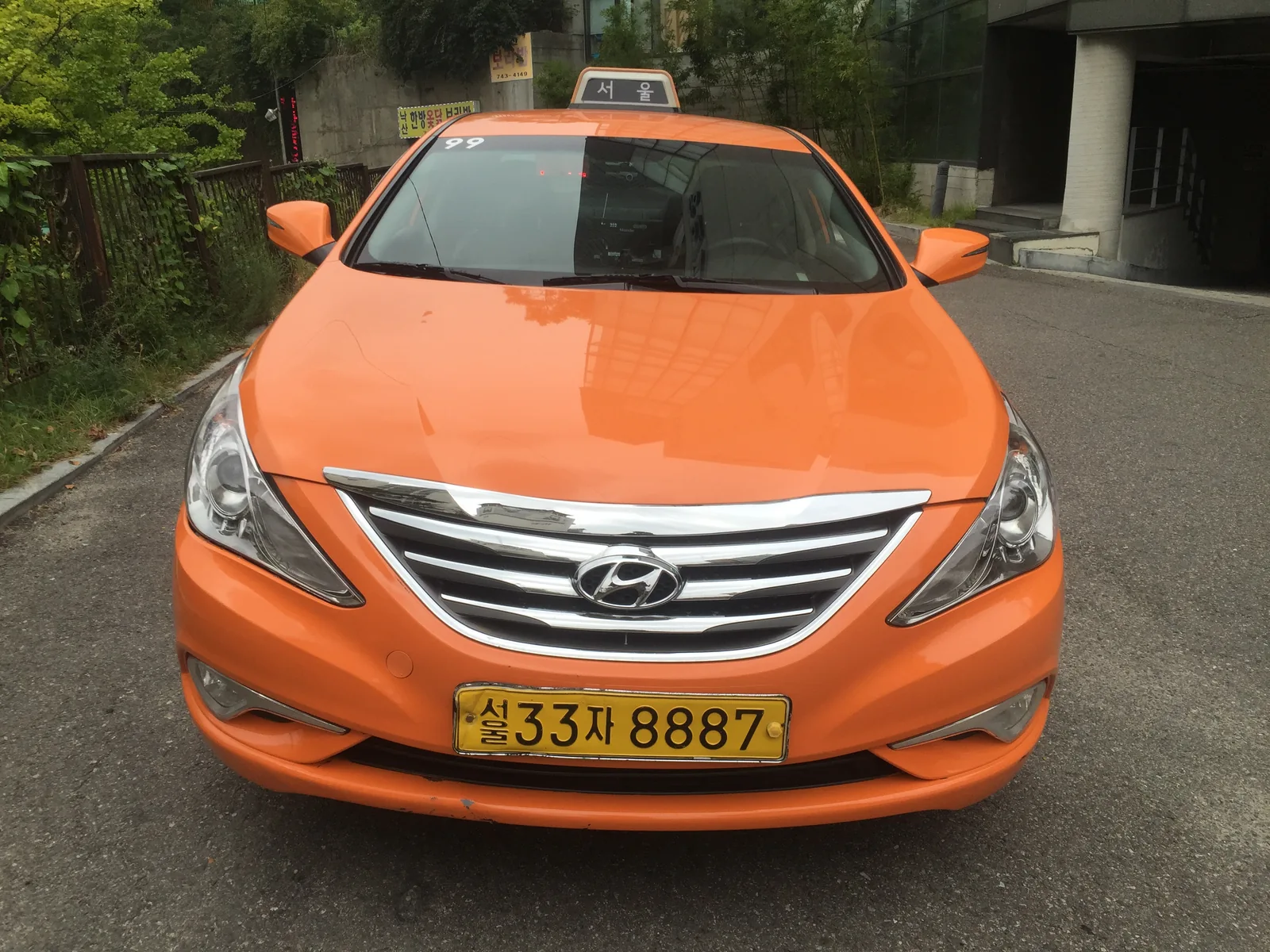
Photo: A Seoul sedan taxi photographed in 2015; the image illustrates the vehicle, not nighttime conditions or a current fare. U2em · CC BY-SA 3.0. Resized and converted to WebP without cropping or retouching. View this photograph.